Tuesday, January 4, 2011

Post Black: The One Year Anniversary Interview


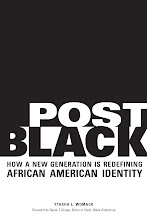
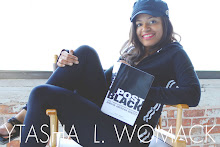
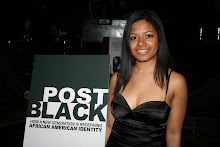
Post Black celebrates its one year anniversary this month. Interview with Ytasha L. Womack conducted by NV Magazine's Christopher Chaney.

CC: Post Black initially graced the shelves of bookstores nationwide on January 1 last year. Reflecting on your interactions with audiences as you toured our nation what have you learned that has intrigued you the most?

YLW: For one, I learned people really enjoy talking about identity.  I also realized that people enjoy gaining new insights and finding reasons to have conversations with people who they typically might not run across. Something else that was reaffirmed for me, is that people enjoy seeing themselves in media. They like to see their opinions and thoughts reflected on a larger scale and realizing that they aren’t alone. Their very livelihoods are somehow validated when people see themselves in media.

However, I’m also really fascinated by the cultural diversity among black Americans and the efforts to understand it. For example, I spoke at a Black History event at an agency in New York and the organizers were very careful to label if an African American and Black History event, to be sure to incorporate all aspects of the black experience including that of recent immigrants. They used both African American and Black because everyone, depending on where they come from, might not identify with one or the other, so they use both.  

YLW: I think it’s really interesting to see how marketers and diversity managers are wrestling with this as well. English, for example, is not the first language of every black person in the US. That’s not a subject we discuss very often. I’ve had people ask me if I included the Afro Latino experience and I was happy to say that I did approach the subject. I’ve had lots of people thank me for including the immigrant experience.  . These kinds of experiences make me be more aware of the language I use when discussing black cultures, so that I can be as inclusive as I can at all times.  As a woman raised in a large urban city, in a largely black neighborhood whose families have roots in the South, it would be very easy for me to assume that that’s some common denominator experience for most African American people. But increasingly, that’s not the case, and its good to recognize that and to have the tools to cross those barriers.  

CC: What observations if any brought you the most value? 

YLW: I really enjoy sharing with teenagers. When talking to teenagers, I can’t assume they know enough background about African American history or current events before I launch into a talk about the book. I can’t assume that they’re familiar with the history of forced limitations or social justice.  At the same time, to go back and explain some of these limitations of the past just so they can grasp the realities of change in Post Black can be short sited as well. So, I like to emphasize how they use limitations or stereotypes about their race to hinder their own world view. I think it’s a good take away point that can be used to build in the future and to understand themes in the past.

In many cases, the new black identity is just their world. So having a conversation about how  today is unique to the times is a fun challenge.  Understanding that President Obama is a big deal or that repealing Don’t Ask Don’t Tell is major carries less weight with them because it’s part of their childhood.  I remember being a kid and the Berlin Wall fell, ending the Cold War. Well, I had just learned about the Berlin Wall, two years prior. I remember my mom saying “Do you realize how major this is? I’ve lived with the Berlin Wall my entire life.”  For teens,  learning about the past is just as exciting as navigating the future.


CC: What were instances that took you by surprise or touched you deeply?

YLW: There was one older woman who came to a book signing in Harlem and she was convinced that President Obama was going to be written out of the history books and forgotten.  A couple of people in the audience tried to convince her that that couldn’t happen, pointing to technology today and the fact that there’s so much documentation on him, but she felt that we were wide eyed and naïve to think otherwise.  Then she started to cry. The audience was startled.  Her feelings were very real. Obviously, she’s seen things in her lifetime that I haven’t . . .things that others fought very hard for me not to experience. And finally, I asked her, do you want me to just say forget it. Give up and do nothing. At the end of the event, she said she really enjoyed the discussion. I think about her comments because its my responsibility to ensure that the events of today that are of value are not forgotten.

CC: There’s one segment of the black community that has a large effect on the other communities you explored, which you really didn’ t profile in Post Black, outside of the Obama Factor – the politicians. Was that intentional? And taking into consideration the intense political climate moving towards 2012 and an interesting mayoral race in your hometown of Chicago with strong African American candidates, none of whom are backed by Pres. Obama whose former Chief of Staff is also running and happens to be a Jewish American, is this a community you would like to examine in a
new book or online?

 YLW: I think people are reevaluating what both strategies mean and how or when they apply.  I didn’t discuss politicians in Post Black because at the time, there was quite a bit of discussion about the “new black” politician and I didn’t think there was much to add to it. Nor did I think it was that new. I didn’t always agree with how the conversation was framed. I personally thought it was divisive, which is in part why I wrote the Obama Factor chapter.Will I write about it more in the future? We'll see.

CC: On Jan. 12, 2010, an earthquake devastated the Haitian capital and its surrounding areas. As a result, there definitely has been an increase in immigrants from Haiti into the United States. In Post Black you discussed the African Diaspora: New Immigrants in America and the intra-ethnic matters that exist with a mix of interviews that details those who have blended into the larger African American community, ignorant views directed at new citizens and those whose nationality comes first. What opinions, if any, do you have of the new wave of Haitian immigrants who are not only entering black communities in America but white ones as well, through adoption?

YLW: Its another identity that’s part of the black experience in America: that of immigrant children raised by white American parents.  I don’t know the size of the adopted Haitian population, but I’m sure it’s a large enough one to impact policy as the children mature.  The rise in multicultural families and the role played in identity is a new reality.  As for the Haitian American population at large, I think its great to highlight that there are new immigrants constantly coming and that those needs have to be addressed and included as well.

CC: Post Black delivers an empowering, full experience of the African American community. When you read it today does it need any altering or have the topics you discussed followed the same trends?

YLW: They’ve followed the same trends.  Transitions continue and the changes that were evident before, are now realities that we live in. Don’t Ask, Don’t Tell was repealed. President Obama, despite attacks from all sides passed a series of reforms and is positioned strongly in challenges with a more Republican congress.  Cultural diversity in African American life is aggressively explored and people who weren’t talking about it before, are now discussing it. Businesses, big and small are reevaluating how to be more effective.  The notion of what’s black and what’s not is being challenged.  The role of church, the rise of spirituality, the rise of agnostics are just a part of this reevaluation process.


-- Christopher L. Chaney

Monday, November 15, 2010

Author Jam Donaldson's book "Conversate is Not a Word"


Jam Donaldson is an attorney and author of the book Conversate is Not a Word. She is also creator of the website www.hotghettomess.com and the TV show “We’ve Got to Do Better.” She’s based in Washington D.C.

YLW: What made you want to write Conversate is Not a Word?

JD: I did not plan on doing this book. My goal was not to do a book, but people around me encouraged me to put it together. I never wanted to be an author.  I started writing and soon it looked like I had a book. 

YLW: Why did friends want you to write a book?

JD: At the time I had my website, www.hotghettomess.com. The TV show was coming out. That was really controversial. People responded to my editorial pieces and blog pieces, and said we need someone in your generation saying these things. And there’s no women talking about this. Some people thought it was controversial or mean spirited, but there was nothing out there. People said no one is crazy enough to say it.

YLW: Some could argue that your criticism of ghettoisms are class based and that you’re critical of people with limited incomes, exposure and education. How do you respond to that?

JD: That's not true. My book is not about the ghetto as a place but as a mentality. I think it’s almost insulting to say [ghettoisms] are just lower class problems. To me that insults the lower class. I know plenty of my peers who are well educated and solidly middle class who are a hot ghetto mess sometimes. Just because you don’t have a high income doesn’t give you the right to act a fool, and just because you have a high income doesn’t mean you’re immune to being a fool. I focus on behavior no matter who is doing it?

YLW: What's so called "ghetto" and issues of class are interwoven. Can they be separated?

JD: Are there some issues that disproportionately impact low income people?  Sure. But Washington D.C has the highest number of upper and middle class black people and yet you see the same behaviors.  Self esteem and relationship issues cross all boundaries.

YLW: Today it seems as if the behaviors you target in Conversate is Not a Word are discussed more frequently. Do you think it’s more exceptable to “air dirty laundry” today than it was when you started your website?

JD: Yes.  I started my site in 2004. It’s six years later and with the explosion of the internet and lots of different voices we can showcase one another’s opinions in a thoughtful kind of way. When you have very limited media covering black people, anything that’s critical is seen as overly one-sided. But as the opportunities for media have expanded recently, it allows us to have more back and forth dialogue. It just promotes more opportunity for understanding now. 

YLW: Why did you start the website?

JD: As for the website, it was one black person telling another black person saying we have to do better. There is a thing in our community where we don’t like to be critical of one another publicly. The thought is that we don’t want to give people more ammunition by showing people at their worst. At some point we have to acknowledge that some of our problems we can address. I do it in a tongue and cheek way. People say I’m mean or I use curse words. But I have a “we have to get our own stuff together first” attitude about things. When Bill Cosby came out with his rants, it was almost the same thing. People said we agree with what you’re saying  but you can’t say it publicly. When I started it was very traumatic to have these conversations. Now people are very into having these talks in public.


Wednesday, September 15, 2010

Color in Comics: Interview with Comic Book Creator John Jennings


John Jennings is the coauthor and illustrator of the new book Black Comix: African American Independent Comics, Art and Culture.


YLW: How did you become interested in comics?

JJ: My mom introduced them to me. She’s a former English literature major. I actually started reading Norse and Greek mythology first. One day she brought home a Thor comic and from then on I wanted to read more. Then I segued into Spider-Man, Hulk, Marvel Comics. I wanted to read anything - Richie Rich, Casper the Friendly Ghost. There was something about the images that attracted me.

YLW: When did you start drawing?

JJ: I started drawing or trying to draw stuff at four or five. I’ve been drawing since I was really young. At ten or 11, I was trying to make comic books.

YLW: Where did you grow up?


JJ: I grew up in Flora, MS. It’s 15 min north of Jackson, a small farming community. We grew soy beans and cotton out there.


YLW: How did growing up in the rural South contribute to your approach to comics?

JJ: It made me practice a lot more. We didn’t have access to much. We didn’t have cable. I used my imagination more. I was so segregated from people. I lived way out in the country. It was so far the school bus wouldn’t come out there. My grandmother had to take me to the bus.

YLW: Growing up, did you realize how few black images existed in comics?

JJ: When I first started drawing comics, it didn’t faze me that there weren’t a lot of black comics. There were only a few: Luke Cage, Black Panther. I really liked those images, but it didn’t occur to me that there weren’t a lot of images until much later. As a professor, I studied media and images. There are so many negative images. Kids have to see themselves as creators of cultural capital, and create with meaning.

YLW: Why do feel that the lack of images of color in comics didn’t have the same impact on you as it did for others?

JJ: That’s an interesting question. I think as a kid you’re kind of oblivious to stuff until you have to deal with it. You stumble across problems and you solve them as you get to them. I didn’t think about it until college or grad school. People become aware of things at different times. If my mom had taken time to explain it to me, maybe I would have thought about it more . The guy who created Brotherman [Dawud Anyabwile] ,his father told him that there weren’t a lot of images and he rebelled and didn’t want to read comics anymore. People deal with information when they get to it.

YLW: Why did you create Black Comix?

JJ: It stems from some of the research that me and Damian (Damian Duffy, co author) have been doing for the last five years on independent black comics. We wanted to look at these types of books done by African American creators and the diversity of things that were offered. Also, if you’re not white and you’re in this country you’re starving for images of yourself. So with this book, kids get to see people who look like them who are creating this work. We also wanted to look at the culture.

YLW: What culture? Comic culture? African American culture?

JJ: The Black Age of Comics. It’s a movement that’s been going on since the late 90s. I don’t know if you collect comics, but there are various “ages” just like in art. Comics have a golden age, for example. However, Turtel Onli who teaches at Kenwood Academy said, 'well what about our age?'. So there’s a Black Age of Comics Convention at Kenwood Academy in Chicago. The next one is in October. There’s the East Coast Black Age of Comics in Philidelphia. There’s the Motor City version. There’s the Onyx Comics which I just came from in Atlanta. There’s this subculture that supports the work.

YLW: How have people responded to Black Comix?

JJ: So far pretty favorably. We were interviewed by GQ magazine. The library scene has been picking it up.

YLW: What are some of the indie classics?

JJ: Brotherman. In fact it’s ready to launch a graphic novel based on it. It was done in the 90s. Totally self produced. Tribe by Larry Stroman [and Todd Johnson], it was an alternative English comic. Tribe is the best selling black book of all time. We have some previously unpublished pages of Tribe in our book.

YLW: What are some of the new comic creators to look out for?

JJ: Millenium Wars by Ashley Woods, she’s out of Chicago. She released her first trade paperback and she produced it. Trimekka Studios out of North Carolina is another. They are a group who work on comics. They did Abraham: The Young Lion, Blackbird, Deadly Artisans. I think they’re about to do a crime comic, too. Jaycen Wise created by Richard Tyler. Wise is a cool character. He’s immortal and has lived for thousands of years so he can be in any kind of adventure. They’ve done him in Ancient Rome. I think they’re doing a western. There are a lot of ideas out there that I think people would be excited about if they knew about them.

YLW: Do you see any similarities in theme or illustration style in black comics?

JJ: One thing we see is that black kids, like most kids are influenced by manga from Japan but they also like to infuse it with graffiti and hip hop. There’s Shana Mills. Her work looks like graffiti meets Japanese manga. I also see these afrocentric vibes where people use the comics as a political standpoint. Instead of basing characters after these Greco Roman images, they pull from other non western imagery. For example, Jiba Molei Anderson has these characters called the Horsemen, but he uses the Orishas as the mythology to fuel the narrative. He lives in Chicago, too.

You can see an aesthetic, however as far as story arcs, they are as varied as we are. You’ll have stuff in there that’s funny, political satire, fantasy. You have fantasy that doesn’t represent blackness. Like Millenium Wars, you probably wouldn’t know that a black woman created the work. Whereas with Brotherman, it’s a political satire. It just depends on what the intention of the artist is. You can’t pin it down. But there are so many modes of what blackness can be. I showed this book to my director and he said, 'wow, they’re so varied'. But they would be. It’s a Post Black kind of thing. What is a post black comic book? Whatever it is you need it to be.

YLW: What do you hope people will take away from Black Comix?

JJ: As a comic creator, I want people to know that you can do anything with comics. American comics are dominated by superheroes in the mainstream. But in the independent, they can tell any story they want. People get comics mixed up. They think it’s a genre, but it’s a medium. I also want people to know they can create a comic whenever they want to. It’s possible for people to do that. I want people to leave with inspiration and empowerment. Especially younger people who feel, 'gee, I didn’t know I could do this'.

For more information go to http://www.blackcomixbook.com/

Monday, August 30, 2010

Award-Winning Playwright Ayanna Maia talks her New Play, the 'N' Word and Hip Hop


Ayanna Maia is a New York based playwright. She is the 2010 Kennedy Center MFA Workshop recipient and won the 2010 Lorraine Hansberry Playwriting Award for her play King N---.

YLW: What is King N—about?

AM: It’s a play about a personification of the last 25 years of hip hop culture. The character goes from boyhood to manhood and he’s holding on to a childhood dream to be a rapper. The play starts in 1987. You see the effects of crack, the effects of capitalism and it all gets filtered through his life. Not to give away too much, but he basically takes on that name as his stage name, and that word as an expression of himself. In modern America, people acculturate and take on different things, and he takes on the word.

YLW: Did you wrestle with using the N word as the title?

AM: I did. I said this is going to be a sore thumb.  It came from a reference in another play I wrote.  I had to ask ‘what does my play want to be named?’ versus ‘what do I want to call it?’ I remember entering contests and my mom was like, ‘please change the title’. One of my professors, Suzan-Lori Parks, helped me workshop the play. I told her my reservation, but she said if this is your character’s journey and what your character wants then you can’t act out of fear.  The play is about his duality and the fact that he thinks he’s a king and a n--- at the same time. I said I have to let go.

YLW: When were you introduced to playwriting?

AM: I got into Gallery 37 in Chicago when I was 13 or 14. I wanted to be in the poetry program but it was full. They called me a few weeks later and said, ‘would you like to write a play?’ My first play won awards. I was the youngest winner ever to win in the Young Playwrights Festival.

YLW: How do you enjoy NYU’s Tisch Dramatic Writing Program?

AM: I was getting another masters, and I left to go to NYU because it was a dream to be in their dramatic writing program.  I had Suzan-Lori Parks as my professor, Spike Lee as my professor and advisor. Richard Wesley was my professor, too.  And I had Donald Boggle as my professor. Do you know him?

YLW: Yes. He wrote the book on black stereotypes in film.

AM: Right. He wrote Toms, Coons, Mulattoes, Mammies and Bucks: An Interpretative History of Blacks in Films.  I had the all-star team in terms of research and media. It was just great to be in their company. They have really lived and expressed themselves in the African Diaspora and universally. I had a wonderful time. I didn’t want to graduate. I just graduated in May.

YLW: Tell me about the Lorraine Hansberry Playwriting Award. Did they stage your play?

AM: I got two awards. One was the Lorraine Hansberry Playwriting Award. They also have the MFA workshop, so they pick six playwrights in grad programs. They did a full scale workshop of the play and they had a staged reading. They brought in professional actors, directors. It wasn’t a full scale production. It was a workshop, but it introduces participants to the theater community. One of the women who participated has a theater in Washington D.C and within weeks she said that she wants to put my play up for the next season. If all goes well, it will have a month long run in D.C in May 2011.

YLW: Exciting!

AM: I‘ve had plays staged, but I’ve never had a full length play with a full scale production.

YLW: Do you hang out with a lot of playwrights?

AM: I know different playwrights, but I find that playwrights are really to themselves. I find playwriting to be very lonely.

YLW: How so?

AM: When you’re sitting there writing 120 pages of another world, you just have to go in and write from what you know, your research and what comes to you. For me, it hasn’t been a collective process. It’s such a deep world when you’re writing different personalities. It’s like doing a research project. Even if you write on your own life, you have to step away. It takes a lot of inner work, and inner work hatches alone.

YLW: Your plays have very strong themes involving black life in the U.S. What do you attribute that to?

AM: Being raised on the Southside of Chicago with parents who were very into the African Diaspora and different cultures, but especially the African Diaspora, coming out of the black arts and black power movement, it makes me very excited about carrying on the traditions of the African diaspora.  I worked with the Schomburg Center for Research and Black Culture. I write diverse characters, but my plays are centered on the Diaspora even if all my characters aren’t from there. I love to write comedy. But when it comes to high drama, l like writing about the African Diaspora.

YLW: You also seem to be heavily influenced by hip hop.

AM: It’s funny, for my character, I wrote his rhymes. I grew up in hip hop culture. I mc’d, I recorded. I deejayed. I grew up as a practitioner; I found that when I write plays, I get to have a better experience with hip hop than I’ve ever had in my whole life.


YLW: What do you mean?

AM: I had a lot of misogynistic experiences in hip hop. I’ve had a lot of experiences where I feel the culture is becoming more ignorant. My dad was a DJ, so I remember when hip hop was on vinyl. It was never separate from us. But as females, the older you got there was more of a line. There were fewer female acts, and you have men presenting females, writing their rhymes and it became more sexualized. I’ve written plays about rappers before, but King N--   is the first that got major exposure.

YLW: Many women who grew up with hip hop as a major influence have an awkward relationship with the culture as they mature?

AM: Honestly, when I was younger. I experienced a lot of positive experiences with it in Chicago. There weren’t a lot of female rappers and the guys wanted it to be balanced. The guys I was around wanted to support you. As it came into the 2000s, it was less about the culture and more about the rap game. It was sexualized. I was in an all-female group. I’ve had that duality, I’ve been at a concert where a guy had the whole audience call me a bitch. It’s funny to me, I don’t write as much as I used to. But I still have so much love for the culture itself and the things that comprise it.

YLW: You don’t write as many rap songs as you used to?

AM: I’ll record a song a year.

YLW: Tell me about your new play, 510 Murders.

AM: There’s a play that I just finished writing in May that’s based in Chicago about the chronic street violence among young men.  I’ve really been exploring a culture that either encourages or is apathetic to using violence. The murder rate in Chicago and the demographic it’s specific to really bothers me. I’ve had two students in my short teaching career who were murdered. I don’t want children to grow up in a culture where violence is acceptable or where gang culture is the norm, even for those who don’t want to participate in it. The other thing I’ve been exploring is African spirituality and I have a couple of other plays with some magical realism.

For more information of Ayanna Maia go to www.ayannamaia.com

Tuesday, August 17, 2010

Poetic Justice: Interview with Renaissance Writer Robert Bledsoe


Robert Bledsoe is a poet, playwright and travel writer. His book “Centennial” is currently available on Amazon.

YLW: When were you introduced to poetry? How did you become a poet?

RB: Growing up I was entered into the Academic Olympics. I was pushed into that by one of my teachers. I grew up reading. Sometimes I really wonder where I was and where were the other kids in my class. We were taught the same things, sat in the same seat, the same material was presented to us. The point I'm making is that I was a big reader especially with content that dealt with black America. So this love of literature carried with me throughout school. We read poetry, a lot from the Harlem Renaissance Era in elementary school. Poetry and reading was fun. I'd go to the library, sift through books. Looking back, I'm amazed at how much freedom I had to do this. This carried on through college where I learned more about Langston Hughes and Countee Cullen.. I have degrees in journalism, English writing and poetry.  


YLW: People are always surprised to find out that you grew up in Englewood. Does the stigma placed on certain black communities bother you?

RB: Let's put it this way. If I tell people that I'm from the South Side of Chicago, specifically Englewood, people who know those areas, you can see the look in their faces. It's like “huh?” Those are areas that aren't necessarily associated with proper speech, college education, firm handshakes, wearing shirts and ties. It's an area that unfortunately is associated with what people think is black life: drugs, crime, violence, the black malaise. So when people find out that I'm from there, it takes a while for them to process. And it's not necessarily white people but black people who have this incredulous thinking process.

YLW: Why do you think people from the same neighborhoods can take very different paths? Why did you take a different path?

RB: I can't really say that there were people on the street saying "you're going to grow up to be a drug dealer", or "work hard to drop out". No one was saying that. The parents want their kids to go to school.  Most of my friends growing up are doing well. I don't know if it was my block or what but most of my friends are upstanding citizens.

But in the neighborhood in general, everyone knew the family that wasn't doing anything. It would seem like it was just one or two houses per block. Everyone else was doing what they were supposed to do. But no one could really do anything about that one house. And somehow that one house really has an effect of damaging an entire community.

It was only when I got older that I realized these super burdens that we have to carry for that one house on the street. I didn't really learn the significance of that one house until later. Because that one house would come to define whole communities and that's not fair. The perception is that all these black communities are blighted and failing but that's not my experience where I grew up.


YLW: You're a poet but you're not a fan of spoken word.

RB: No. I'm more of a traditionalist. I'm a poetry snob.

YLW: Why?

RB: I think the subject matter is limited and there's too much emphasis on performance. Traditional poetry isn't always performed, it's read. [Spoken Word poets] think if you speak in a certain cadence and inflect on a certain word at the end of a sentence and almost sing, that they are saying something. To me poetry is about reaching the heart and reaching the mind and it's something that's pleasing and pleasant. It's not something jarring.


YLW: Do you think you're being a little harsh?

RB: I'm just afraid that many of our youngsters, when they think of poetry, [spoken word] is what they think about. How many of them are really learning about Maya Angelou? I wish I could say it's an education thing, but it's not. Many spoken word people are college degreed, I just don't think it's poetry. They're putting on a show. How about we remove the word poetry and call it spoken word creativity?


YLW: You have an issue with spoken word being called poetry?

RB: I think it has usurped the word poetry. Poetry is about more than 'roses are red, violets are blue'. It's a craft. I don't want to say that spoken word isn't creative, I just think there's too much emphasis on the performance part.

YLW: At the expense of the writing?

RB: Right. You're not focusing on what's being said. When you see spoken word, you're using your eyes more than your ears. I went to a Def Poetry Jam audition and I read a poem I wrote when Gwendolyn Brooks died. Here I am reading what I think is a poem, and everyone else is doing spoken word, and I said I'm so out of place here. But definitely, there was some confusion on my part on how poetry was being defined. People liked it but it wasn't the write venue.

YLW: You're a globe hopper. You're out of the country three or four times a month. Do you think travelers share a kindred spirit?

RB: It's a longing. Why does one travel anyway? If you have what you need at home, why travel? For me, the whole travel experience began with me wanting to know what more out there is there. I know that there has to be some place in the world where I feel free to be me. There's a song about that. Because the constraints that I felt being who I was on the Southside of Chicago or being one of the few blacks at a small school in rural Minnesota, the constraints on me were tight. They were suffocating.

YLW: How so?

RB: Because you couldn't be a black intellectual. That's an anomaly. It's like somehow or another, if you are not a black guy who enjoys hip hop, if you don't play basketball every weekend . . . and don't get me wrong, I like watching basketball, but I was never good at it. Somehow or another, some things were equated with black and some things were not. As a collective, I think that black people have bought into it. Travel for me was great. It's a sense of pride for me that people can see we're not this monolithic community. We don't all like hip hop, not all hip hop anyway. Some of these images are damaging. We actually speak more than just Ebonics.

We can't have our kids continue to aspire to speak bad language. And that's what they identify as being black. Maybe I'm old school, elitist, but I think the stakes are too high for us to uphold that alone as the black experience.

YLW: Why do you travel?

RB: One travels because one is seeking to discover something. One is not getting something. One wanted tea and spices so they set sail. And I set sail to just learn that there was more to life than America, and getting away from the expectations that are laid out for me. It's nice to just lay on the beach or read a book on the beach, but these things aren' t considered black if you enjoy this stuff. I don't know if you read the John Mayer stuff. (Referring to the John Mayer controversy where he mentioned having a hood pass and not dating black women).

YLW: I did.

RB: Why are there elements of our community who feel they need to have a pass and if so, why give it out? And why call it a hood pass? We need a discussion. Do we want to hold on to negative images that go out? We have to have a serious discussion on whether or not we want to move forward. I think President Obama's candidacy put a lot of this front and center. When people think black American,what do we want them to think first?

We can't discount the power of imagery and who has access to media. You can be as individual as you want, but if the collective imagery is of the hood then that individual who doesn't match the image is going to have a problem. When you step out you are combating the images of people who look like you that are thrown across TV sets across the world.

YLW: When you travel you don't deal with it?

RB: Not as much. Here it's just so entrenched. Take Eminem. How is it that Eminem can be blacker than me? Some black people would see him as blacker than me. Why? Because he doesn't speak proper English? He could put on a suit and tie and go mainstream. Do I have that option?

It's deflating and defeating to talk about because you realize how entrenched it is. If our youngsters do well in English, they're marginalized. There's no reason why in 2010 we should still be having these discussions.


Robert Bledsoe can be reached at embryonic@msn.com.

Monday, August 9, 2010

Sci Fi Author Nnedi Okorafor talks Literature and Afrofuturism


Nnedi Okorafor is a fantasy/science fiction writer and English professor. Her latest book is Who Fears Death about Onye, a woman with a magical destiny in post apocalyptic Africa.

YLW: How did you become a science fiction writer?

NO: When I was a kid I read a lot of books. I read far and wide and not just science fiction. I was attracted to these stories with magical things in them. I started writing my own stories when I was 20. I wrote magical realist stuff. I started off writing fantasy. It was very natural for me. It wasn't like I was trying to write it. However, people tried to turn me away from that because it’s not academic. I started getting things published. Then I realized I wasn't seeing Africa written about in the future so my fantasy writing became part science fiction.

YLW: What's the difference between fantasy and science fiction?

NO: Fantasy involves stories where strange things happen that are due to magic, the mystical, or the unexplained. Science fiction is when the strange things that happened are explained through science, even if those things aren’t possible yet. I tend to mix the two. In my first book Zahrah the Windseeker, you have plant technology and there are technology producing plants. But you also have a girl who has the ability to fly.

YLW: Your book includes a wide range of elements from shamanism to female circumcision.

NO: There's shamanism, there's Juju in it, there's magic, genocide, female circumcision. It deals with issues of African men and women. I based my Juju on actual Ebo traditional beliefs. It pulls on the fantastical.


YLW: Afro futurism is a new term to explain science fiction involving the African Diaspora. Is your work afro futurist? .

NO: People have asked me if I consider it to be afro futurism. By that definition, certainly. But I tend to resist a lot of the labels because labels can be very confining.

YLW: How so?

NO: People who usually don't read science fiction won't read it if it’s labeled. Octavia Butler wrote Kindred, a time travel story. It falls in the line of black literature, but if you put sci fi on it, some people won't read it.

Some reviewers have called Who Fears Death uncharacterizable. Unless people know what something is they freak out or if they can't name it they ignore it.  The novel before Zara, my first novel was an adult novel, but when my agent shopped it around it got past the acquisitions editor, but when it got to the money part the reps didn't know what to call it. It's fantasy, but it's too literary. Is the main character African or African American? They couldn't label it properly and because of that it got rejected and I dealt with that for three years. And then I wrote Zahrah the Windseeker.

YLW: I'm sure people compare you to legendary sci-fi writer Octavia Butler. What are your similarities and how do you differ?

NO: I'm a huge Octavia Butler fan. She blew my mind. I was writing these things and I didn't realize that what I was writing could be published until after I read her work. First and foremost, she writes in a sparse format, almost journalistic. There's no mincing of words. I always liked how she could draw you into the story to the point where you forget that you're reading. We both deal with gender and race. We write complex characters.

We differ when it comes to setting. What I write takes place in Africa or a place like Africa. And Octavia's books tend to be in the U.S or she starts in Africa and goes elsewhere. So our settings are a little different. I pull from a lot of Nigerian folklore and Nigerian myth. She pulls from that, too, but not so much.

I feel like every science fiction and fantasy writer, we are all compared to Octavia and that's because she is one of the only black fantasy and science fiction writers, so I guess these reviewers can't compare us to anyone else unless their black.


YLW: How have people responded to your work?

NO: Mostly, really positive. I've had some hate mail from people who feel I'm airing African's dirty laundry.

YLW: Hate mail?

NO: I get emails calling me a witch. In Zahrah the Windseeker,  the main character is Dada, which means a baby that's born with locked hair. Before colonialism that was very special. But after colonialism it was considered evil. And this character realizes she has the ability to fly.  With my book Who Fears Death, I have opinions about female circumcision and I deal with that in the book. At my first book signing for Who Fears Death, in Michigan, these African academics came to attack me. There's a female circumcision scene in the book, it's pretty brutal. I read it and one of the professors said in a real circumcision there's no lights. Well, this is science fiction. They feel I had no right to speak on this because I hadn't been at an actual circumcision.


YLW: Do you feel some of the criticism has to do with you being a child of Nigerian immigrants born in America and not Africa?

NO: Definitely, my fourth was titled Akata Witch. It's a derogatory term for African Americans, or American born Nigerians. Akata means bush animal. It's not a very nice term. The book deals with some of those issues.

YLW: In Post Black, I write about African immigrants and one American born Nigerian said she felt she had to defend Africans to African Americans and African Americans to Africans.

NO: That's exactly what I had to deal with.  It's like you belong but you don't belong. The thing is, it's positioned that we can bridge a lot of those gaps. I understand both sides. But sometimes you don't really want to be on the defense. I can see a non fantasy book in me on this one.

For more information go to www.nnedi.com

Wednesday, July 14, 2010

Publicist Yolonda Brinkley Talks Film in Cannes


Yolonda Brinkley is the founder of YRB International Exposure which presented Beyond Borders, a cross cultural panel and networking forum for filmmakers, at the 63rd Cannes Film Festival last May. YRB is a marketing and public relations firm.


YLW: Why did you start the Beyond Borders at Cannes?

YB: I started it because when I attended the Cannes Film Festival in 2009 I felt like an outsider, although it was a great experience. You have to belong to a certain company to get to a lot of the functions. I saw a lot of minorities there and I could only assume they felt the way I felt. I felt there was something I could do to make it participatory so that we're not just festival goers but major players in the world festival market. Everyone thought it was a great idea. When I told them I was spending my own money . . .

YLW: You funded it yourself?

YB: Yeah. I just wanted to see if I could give it some legs. It was at the Majestic Hotel, which was only about $1,900 euro, which is about $2,500 dollars to rent the space, and have equipment. My airfare was $1,100, as was my hotel. Then I made flyers and t-shirts, so I spent about $5,000. I got about $750 in sponsorship. But it was all worth it. I got a call from the Australian press after one of the filmmakers on the panel won. I'm an up and coming entertainment publicist and people are calling me saying I heard you did this event at Cannes. That's priceless.

YLW: Who participated?

YB: The participants were film directors who took part in the Quinzaine Des Realisateurs. It's almost like the independent film leg of the festival. They find up and coming filmmakers and directors. I had two of those directors. One was Michael Rowe, he's an Australian filmmaker who lives in Mexico. Director Philippe Braganca, from Brazil, also participated. Then Michael Rowe won the Camera D'or, the golden camera award for the first time filmmaker in that section. Although there weren't a lot of people, it was a great panel. They are the crème de la crème of the elite filmmakers.

YLW: Do you speak French?

YB: Yes.

YLW: Initially, you wanted to do a panel focusing on people of color. How did that evolve?

YB: It went from a multicultural discussion to a cross cultural discussion, because I couldn't confirm ethnicity, but only nationality. I couldn't get enough blacks, Latinos and Asians from the U.S to participate. It was an interesting transition before my eyes.

YLW: What happened? Why was it difficult to get participation?

YB: It was going to be built around one of the executive producers with Tyler Perry Studios. Then he wasn't able to come out, due to scheduling. I called alI kinds of studios, production companies, organizations, but either schedules conflicted or people simply weren't coming to Cannes. Cannes is an expensive festival in terms of accommodations and travel. People aren't just going just to go. Black filmmakers, even celebrity black filmmakers aren't just going. There were a small number of emerging filmmakers of color from the U. S trying to go. To my knowledge, there wasn't a large number of established filmmakers of color there, either.

YLW: Are you familiar with the Blackhouse Foundation? They've hosted festival events in the past to address these issues.

YB: Blackhouse foundation travels to festivals, but they decided that Cannes was too expensive to attack. They go to Sundance. A lot of people feel it's too expensive. There was no black programming except Afrique 360, and the founder is a friend of mine. My goal wasn't to reinvent the wheel.

YLW: What concerns did the filmmakers on the Beyond Borders panel share?

YB: The discussion was about diversity in thought and efforts. Michael Rowe shared that when he did his film, his investors wanted to have...and this is common in Mexico in general, they wanted blond haired, blue eyed Mexicans whereas he wanted a person who looked Mexican. He had a conflict with the producers because of that. Ultimately he won out. Braganca talked about financing issues and control over your project. Each filmmaker said they would like to see more coproductions between indie filmmakers in different countries.

YLW: African American films have a history of not doing well internationally. What do you attribute that to?

YB: I'm not a filmmaker, but there are so many people at Cannes selling so many things. Often times the urban message does not transcend boundaries. With Tyler Perry or the Madea character, it doesn't transcend cultural barriers. After translation, in other parts of the world, it's not funny. If you have a broad message that's more drama or action, perhaps. But my thought process is, hey you have a film you're trying to sell, go expand the network and discuss the filmmaking opportunities.

YLW: You didn't start your career working in film.

YB: I was in a public relations and corporate communications function, for Jaguar/Landrover. I quit two years ago to pursue my dream, so this is what I'm doing.

YLW: What advice would you give to people who want to go to Cannes?

YB: I say just do it. It's definitely an experience. If we wait for people for people to give us the permission to do it, then we'll never do it. When you go, network with people outside of your traditional circle. We want to expand our multicultural, cross cultural network. Go outside of your traditional network to meet people.

For more information on Beyond Borders contact Yolonda Brinkley at Ybrinkley@hotmail.com