Tuesday, January 12, 2010

The Creative Life: An Interview with Event Designer Erika Jones of A Social Life


Erika Jones is an event designer and owner of A Social Life. She also doubles as Erocka J, soulful background singer on the national underground scene.


YLW: You have an unparalleled confidence about you. What do you attribute that to?

EJ: I reflect a lot. I don't live with regrets. I often ask myself if you could do it again, would you do it again? It helps me find my center for myself. Also, my parents are older so when I came into the picture, I had older brothers and sisters, which caused me to have an older personality. It just helped shape certain things for me.

YLW: I thought you came up with a really cool design element for the Post Black Launch Party. What was your vision?

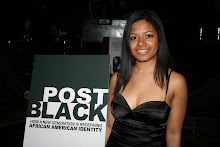
EJ: With Post Black I thought, let's focus on the book and let's have the book be the basis for the design. The thought process was about promoting the book through edgy moments within the book. I played on the controversy through the design element. I was using the book excerpts as fuel for the design. Sometimes in event design simple is more classy. You don't have to have gold chandeliers hanging or tumblers unless that's what the client wants.

Sometimes people want something really nice, really different. So we had visual recreations of the book with a quote. People think they're picking up the book, but it's really a design element that highlights a passage. People just want to feel good and by creating that feel good atmosphere you get what you want, too.

YLW: You have a knack for creating unique simple elements that elevate affairs. What are some of your other favorites?

EJ: I'm very proud of this last event I did at for the movie premier of Online at The Wit. It was a simple event but effective. Because the movie was fashion forward we took two of the outfits from the event and brought that to life in the vignette.

I had another art event where the artist did his rendition of pin up models and instead of having someone be a bartender, I had a model sit on top of a bar and pour the wine. So we had a model in 1950s style as a wine bearer.

YLW: How did you get into event design?

EJ: My mom was a caterer and she would do event design as well. Growing up we would always watch certain shows. I grew up watching Martha Stewart who did design as well as catering. I loved the aspect of making a place look plush or pretty. I knew I could plan a party well, but I also loved the ambiance. I knew that I could be crafty and creative and do things on a budget. It's kind of innate. I can visually see how it can go and putting those aspects together and finding the people who make it happen.

YLW: Did you study event design formally?

EJ: No, I didn't. I was into tablescapes and branched off from there. I have a lot of designers as friends. I just had an eye for it. It was something I was taught as a child – how to do design on a budget. I learned it from watching different shows. Basically, I taught myself.

YLW: How did you become a background singer?

EJ: I always knew I had a voice. I remember the very first time I sang something I was in catholic school, I remember growing up singing and thinking I could do something with this. In college, I hooked up with some other people who were singers. My brother is a guitarist in Chicago so we would be paired together and we would perform together.

In college, I started meeting different musicians . My brother was in a band and I said I can sing background for you. I started singing with them. From there, I would do background for different artists. Then I sang background for Esthero, a Canadian artists who was really known underground. She took a seven year hiatus and she needed a background singer to sing the low parts. A woman I frequently sang background with referred me, and the lady said Erika Jones will be the only person who will give you what you need. I auditioned over the phone and it moved from there. You know how people fall back on a degree? Well, I have a degree, so I fall back on singing.

EJ: Who do you sing back up for?

A lot of underground artist like Discopoet Khari B., Bumpus. I'm just for hire. I sing in studio, too. I'm a background singer for hire.

YLW: What's your vocal range?

EJ: I'm a contralto, mezzo soprano.

YLW: You run an event planning company and you sing backup? How do you juggle both responsibilities?

EJ: I turn into a whole different person. When I am party planning, I'm Erika Jones, I can still come to you as corporate as you need to be. When I'm singing background, I'm Erocka J. She's the chick who wears all the stuff she wants to where, as funky as she wants to be. I'm an artist.  I'm able to find balance in that as long as I remember I'm an artist and that everyone will see the artist in me. There's people who know me as a singer, but don't know me from a Social Life. There's people who know me as A Social Life, but don't know me as a singer.

YLW: That's funny, because I shared with a friend of mine that you were planning my event, and he said, wait you mean Erika the singer? He was very surprised.

EJ: Happens all the time.

YLW: Many women today feel incredible pressure to “do it all.” Do it all doesn't just refer to balancing work and home, but also having so many options and talents and not knowing what to do. Did you ever feel you were at a crisis point?

EJ: I was in that state right before I went on tour. I had graduated from Columbia College in Chicago with an Arts Management Degree with a concentration in music business. In 2002, the music industry was changing and I didn't know what I wanted to do. I had started a company before and I was producing events. It was going slower than your average start up.

Then I got into the mundane of getting a job that had nothing to do with what I wanted to do. I always knew in the back of my mind that this was not going to be for the long run. I was just trying to stay afloat. I don't think I was singing at that time. It was a noncreative time in my life. That lasted for a year and a half. I would dabble in some creative things but it wasn't enough. I kept saying I need to get on somebody's tour singing background. It's amazing how what you say will come into fruition. Then next thing you know I was at the brink of crying at my job.

EJ: I wanted to quit but I couldn't quit. Then I got a phone call from Astero, saying she needed a background singer. I said this could change the rest of my life. I could say to hell with it, don't do anymore party planning and just sing background. You can always do whatever you want to do after you do this particular thing. After that tour ended, I looked into reality with a whole different eye. The tour ended, you don't know if another tour will happen, so I dissolved my old company, started a new company. I got back into the workforce, but I had a different mindset. This job was to fund what I wanted to do.

I tell a lot of women sometimes when you look at where you are right now, that doesn't mean that's where you're going to be next week, next month. For people who are in their job and hate it, when you hate it the most, that's the time to get creative. Write down the things you like to do and figure out how you're going to make it happen.  People need to realize that sometimes when you lose your job it's a blessing in disguise.
YLW: Are you bombarded with questions about your locks?

EJ: People ask how long is it or how many years have I had it. They don't ask too much. They may say they like it. It's amazing in the hood some people try to compliment you by not complimenting you at the same time. They say, your hair looks like Medusa. They're not trying to cap on it, they just don't know how to say it. I still get compliments on my bad hair days. I don't get too much flack. I've gotten some of my best jobs since I got locks. I remember my mom telling me don't lock your hair because you'll need to get a job and I' m like what are you talking about? It's been a plus and has become a part of me. I have a piercing in my lip, too.

YLW: You do? I've never seen it, which is odd because I see you frequently.

EJ: I forget that it's there. I've gotten my best jobs with my piercing. I got my piercing and hair locked in the same year. It's interesting that I was able to get my best jobs with both. I've worked with clients from across the U.S, with doctors and corporate managers and I had this piercing in my lip. But it's all about how you perceive yourself. I didn't come across like I'm a teenager with a piercing. I thought about changing it and getting a black ball instead of a silver. But I said don't fix something that's working.

YLW: So no one says anything?

EJ: I get compliments. They say it looks really nice on you. You think when you get a piercing you can only work in retail. I basically carry myself like I'm a grown women. If anything they'll see you're an artist. It all depends on how you perceive yourself.

YLW: Amazing. Where is it?

EJ: It's right under my nose, like a mole. I put it in a place where you wouldn't see it. I've had my locks for 11 years and this piercing for 11. I knew it was OK when my mother and father saw it separately but together. I got off the plane and my dad gave me a hug and said 'wow, did it hurt?' My mom said I would give you a whippin if it wasn't so cute. So I knew that I was OK.

For more info on Erika Jones contact ejones@asocialife.com


POST BLACK BOOK LAUNCH IN CHICAGO SETS "NEW BAR" FOR BOOK EVENTS


The Post Black Book Launch in Chicago was wildly successful. Nearly 200 people trekked through Thursday's freezing temperatures and snowstorm to attend the Post Black Book Launch at Plush in Chicago last Thursday. Despite an 11th hour venue change (the scheduled venue refused to open and notified organizers a little over an hour before the affair began), the team of supporters and organizers launched a massive viral campaign, turning to blackberries, tweets, Facebook and emails to drive attendees to the new venue. The event began promptly at 6pm at Plush in Chicago's West Loop.

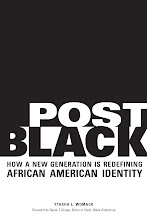
Susan Betz, editor for Chicago Review Press which published Post Black: How A New Generation is Redefining African American Identity by Ytasha L. Womack said had never seen a book event stir such excitement. The enthusiastic supporters, the viral rerouting, the tasteful decor, the high volume of book sales and the size of the crowd were all a testament to the innovation in Post Black The event which embodied the Post Black theme featured futuristic art videos, theme pillows and teaser books all styled by Erika Jones of A Social Life. According to Betz, the Post Black Book Launch set a "new bar" for book events.

The event was attended by an ecletic mix of young professionals including writers, artists, entrepreneurs, educators, ministers, and other business leaders.

"I was amazed by the turnout and the number of young African American professionals that turned out to the event. In light of the weather and circumstances, I was amazed to see that so many people wanted to share in the experience. As as people looked at the quotes and art on the screens to quotes in the book it just made everyone so excited," said Vikki Ewing, a banker who was also featured in the book.

 Womack was equally touched by the crowds sentiment and credited the books success to the audience. "Whenever I talk about Post Black I always use the word 'we.' While I wrote this book myself, this book is a reflection of your life's work, passion and drive."

The Post Black Book Launch was sponsored by Blackbook.com.

Saturday, January 2, 2010

POST BLACK AUTHOR YTASHA L. WOMACK DISCUSSES HER NEW BOOK


Featured interview with Post Black author, Ytasha L. Womack. Interviewer: Chris Chaney of NV Magazine. Chaney is featured in Post Black as well.

CC: Post Black has been a term that has bounced around really since Obama has taken office. What does it mean to you?


YLW: Post Black embraces the diversity within the African American community and includes those communities and lifestyles that don't fit neatly into the “African American Identity Box.” This box includes a range of assumptions, beliefs and ways of life that all African Americans are assumed to ascribe to. So I start the book off really knocking all the assumptions as to what the book is about before I go deep into the subject matter.

In the book itself, I take a look at communities in the Gen X and Y world including professionals, artists, entrepreneurs, spiritualist, as well as identity issues involving young women, immigrants, biculturalism, the President, The Talented 10th concept and more.

CC: Why did you decide to write this book now? What about the America we now live in or the generation that we are a part of made this the time?

YLW: There have been incredible innovations in the past decade or so. Social constructs have changed and managing or embracing this diversity is forcing many people to reevaluate their beliefs. For some people this is a very fluid process and for others it is extremely difficult. It's actually a global occurrence. But there wasn't much of a context for the discussion within our community and I hoped that this book would provide one. I include conversations with family, friends and people of all walks of life. I include anecdotes. I also include some personal experiences because it's not fair to talk about African American identity and not talk about myself.

CC: You cover a lot of topics in your book that are all integral to this generation’s identity. What portion of the book do you see as the most significant? What interview responses to what topics were the most surprising?

YLW: I thought it was very profound that everyone I interviewed either consciously or subconsciously made life decisions based around the notion of African American or black identity. In many cases the careers and schools they chose, the interests they pursued, the decision to be an entrepreneur, their commitments to service, etc were all extensions of defining themselves culturally. All decisions were seen as either a reflection of, responsibility to, or some way of advancing African American culture. Even spiritual pursuits. That's major. So whether someone was a salsa musician or an African immigrant opening a restaurant, a minister, or a homeowner in a gentrified area, each felt this need to make decisions out of a larger sense of cultural awareness.

I was surprised when an African immigrant shared that she felt she was at a crossroads of sorts having to defend native born African Americans to other African immigrants and vice versa. She also said that for African Americans to know their history wasn't enough. We needed to take a DNA test to learn our African lineage. I found myself thinking about that. For the blog, I interviewed an immigrant who was raised in Europe and talked at length about how he was influenced greatly by African American culture and the civil rights struggle before he came to the U.S. I interviewed a woman who was told “you're from slave” when she was in Europe and introduced herself as African American. In some countries to identify yourself as African American causes confusion. No one knows what you're talking about. I interviewed black gay men who couldn't relate to gay identified culture. But I was also surprised to learn that many people who had religious practices and weren't traditional Christians initially felt very alone in their journey. This surprised me because the number of people who share these beliefs are significant.

CC: You covered some subjects that are taboo in everyday conversations, specifically religion and sexuality. Why do you think it was necessary to write about how African Americans see themselves in this area?

YLW: Probably some of the greatest change has taken place within the frameworks of how people view themselves both spiritually and sexually. They are both core subjects for this generation. To ignore them would be to ignore some of the leading changes within the African American social paradigm.

CC: With regards to religion you go into detail about your personal beliefs and you highlight those who have broken from religions traditional to African Americans to embrace Buddhism, Yoruba, etc. What effect did you want to have on the reader?

YLW: I'm hoping that the reader sees the diversity in the African American religious experience. There's a growing interest within America at large in both spirituality, Eastern religions, indigenous spiritual beliefs as well as both New Age and New Thought. African Americans are a central part of that experience. In many cases we provided a number of pioneers in those areas and the beliefs have been in the making for several generations in this country.

CC: There is a quote in your book where you are writing about misogyny in Hip Hop and this one young female college student you interviewed defends scantily clad women in a video by saying “Wearing no clothes is a part of our culture. People in Africa don’t wear clothes.” Did that really happen? And do you know where that young lady is now so she can be further educated?


YLW: That's a true story. I don't know where she is. But hopefully the conversation gave her something to think about. The video in question was Nelly's Tip Drill, which caused a protest amongst college women. The young lady couldn't explain why she liked music and videos with misogynistic themes. Many young women can't. But she got flustered trying to explain it all and defended it by saying it was a part of her heritage to do so.

It was appalling to say the least. But the odd thing was she was trying to understand misogyny or sexuality in the context of African American identity. It was an attempt to make some connection between her decisions to listen to sexualized, misogynistic music and her ancestry. Her connections were totally off, inaccurate, and ignorant. But even that decision was an attempt to link her life to some greater sense of African American identity. It goes to show how powerful and misguided notions of black identity can be. She couldn't just say I like the women in these videos or I like dressing that way and I feel guilty. She had to explain her guilt away by saying it was part of her distant lineage. Britney Spears can wear revealing outfits but I can't imagine anyone defending her right to do so as a part of her European ancestry.

CC: You spend time in your book discussing the new black populace and how they identify themselves with African Americans. What you reveal is a definite cultural gap. What do you think it will take to close that gap between Africans, Caribbeans and African Americans?

YLW: I don't think the gap is that wide. However, increased social interaction is the key. Frequenting cultural events and meeting people of other cultures so that other cultural groups aren't viewed as “other” is a necessary step. This is happening in many arenas. In some cases it has happened for years, but in places where it is not [happening], some initiative has to be taken. I also think it's important that there's a recognition that being black in America embodies a variety of cultural backgrounds. There should be more dialog and education on that issue. That recognition alone will forge more inclusiveness within groups and organizations who may not realize their limited definition of “black in America” is repelling various segments of the black community.

CC: When you take on the lofty goal of writing a book about a culture it definitely puts you in a position of being criticized. Immediately, people ask who are you to write this, especially African Americans. So how about you answer that now. What qualifies you to write this book?

YLW: I quote Robert Kennedy. If not me, who? If not now, when? Well, that applies to any burning idea someone has. And this limited concept of African American identity has disturbed me for some time. The issue of identity kept popping up in my work and life experiences. And I've devoted a great deal of time to trying to be me in the midst of many assumptions as to who I should be and how I should operate. I've written for numerous publications targeting African Americans. I've interviewed a span of black people on a range of interests and issues. And personally, I've been involved in a wide spectrum of black life from the arts to business to media. My perspective is a valid one.

One thing that became very clear as I explored these issues is that the notion of blackness wasn't created by black people alone. It's a definition we were boxed into and have been struggling to redefine ever since. Much of this effort to redefine took place in the midst of harsh and extreme resistance. However, with respect to identity, everyone has an invested view into whatever descriptions they use to identify themselves, whether that be racially, ethnically, sex, etc. In changing times, all of these labels come into question. What does it mean to be a man in 2010 is as complex a question as what does it mean to be African American, or Asian American, or bisexual or blonde.

CC: If there could be one ideal African American identity what components would it have and is there anyone who represents it past or present?

YLW: There is no ideal black identity . . . and that's a good thing. At the same time, I do think it's very important that people know the richness and diversity of culture, history and the role it plays on the world stage and in their own lives. I also think people should have a strong sense of responsibility to both educate and empower people around issues of culture and history. Moreover, cultivating a sense of purpose that includes a respect for humanity and a dedication to social good is important. But I would advise that to anyone.

Monday, December 28, 2009

Joan Morgan: A conversation on hip hop journalism, sexism and the term African American


Joan Morgan is one of hip hop journalism's prized pioneers and celebrated culture critics. Her work explores culture and sexism. She wrote the black feminist reader "When Chickenheads Come Home to Roost." Her latest essay “Black Like Barack” is featured in the book “The Speech: Race and Barack Obama's “A More Perfect Union.” A woman of Jamaican heritage, she was raised in New York.


YLW: Your book "When Chickenheads Come Home to Roost" continues to be a popular feminist reader. Are you surprised that nearly a decade after the release it's still relevant?

JM: I would hope that it wouldn't be as relevant and that we would have moved away from some of the issues that the book grappled with. It's probably more relevant on a mass scale then it was when it was initially published. I'm still surprised when I get a 22-year old who says I love your book. In some ways it has actually gotten worse.

YLW: What's gotten worse? Are you referring to hip hop?

JM: When I wrote "Chickenheads" there was a much greater range of women in the music and a greater presence of the female voice. You don't have that now. That lack of representation is a problem. There has been a narrowing of the type of hip hop and no real improvement in the level of sexism and misogyny in the music. If you were conflicted before you are more discouraged now. I talk to women now who don't even feel they have a place in the culture. At the time, I felt that it was as much mine as anyone else's.

YLW: You are a pioneer in hip hop journalism. What are your thoughts on the evolution of the field?

JM: When I started writing there was no hip hop journalism. I remember when someone came up to me and Kevin Powell and said I want to be like you, I want to be a hip hop journalist. We were writers. We weren't aspiring to be hip hop journalist. I think the evolution is a good thing but no one was trying to establish that as a genre. We were pioneers. We grew into the title and learned how to work with it. I think there's a great body of work from 79' to the late 90s of important works by a group of important writers who documented the culture. That said, I don't see a lot of hip hop journalism these days. It's much more about celebrity culture.

YLW: How do you define hip hop journalism?

JM: Hip hop journalism is committed to writing about hip hop culture but unafraid to criticize the culture, the artist, and to defend it. Hip hop was not glamorous when I started. There was no glory. If you wrote about hip hop, you were in a grimy club at 1 am in the morning. There was no car service. But when it became this multi-million dollar machine all that changed.

Writers weren't afraid to do criticism. Now music writing is a part of celebrity culture. Everyone wants to be down. They don't want to harm a relationship with the artist, label, advertisers. It limits the form of writing. In the past, writers were committed to being honest and to being critical.

I think hip hop journalism was really born in a certain time period and out of a real desire to fight for a place and a context for the music. And it was written by people who were from that culture. So when those stories were calculated and were told, it was written by people who were a part of the culture.

YLW: Are you happy with hip hop's growth into this multi-million dollar enterprise?

JM: Yes and no. I'm a late 70s baby. I'm a child of hip hop. I never had the expectation that it would live forever. I still remember being completely shocked when I heard a rap song on the radio. I saw it make the journey from the hood to where it is now. I never operated with the 'oh this could last forever' mentality. In many ways we were just kids who didn't realize the enormous potential it had to capture the world's imagination. In that respect it has far exceeded my expectations.

On the other level, I'm disappointed in the level of creativity. I just don't like it. To be fair, I think the production is better. You could argue that linguistically the skill level has far surpassed “ a hip hop a hippee, etc” and you have an artist like Jay-Z who keeps evolving. But I just don't think the music is that good.

YLW: What are your thoughts on writing these days? Do you follow any emerging music writers?

JM: I remember Kevin Powell's answer to that kid who asked how do you become a hip hop journalist and he said read . . . read Toni Morrison. James Baldwin. That' s one of the disadvantages of the blogosphere and print media. Anyone and their mother can call themselves a writer now because they have a blog. Every single piece we wrote back then was like going to school because your editors were kicking your ass. I read stories today and it feels like I'm reading a bio. The publicist could have written it. It's the machine behind it. Before as a hip hop journalist I could say I have to be alone with this person for 3 days. You can't do that anymore.

YLW: How do women reconcile with some of the sexism in popular culture?

JM: I think women are equally conflicted with it. We still live in a society where you can have instant celebrity by sleeping with Tiger Woods and selling your story to the media. You can be a video vixen and your story can get a million dollar book advance, where a hip hop journalist isn't going to see that kind of money.

YLW: You don't use the term African American. You prefer black. Why?

JM: I look in the mirror and see that I'm a black woman and see our commonalities but I do have a cultural experience that is different from all of my friends who are African American. I don't allow people to introduce me as an African American writer because people make assumptions. They make assumptions about my culture that aren't bad, they're just false. I'm from a group of very proud Jamaicans and that should be honored.

When I think post black, I hope there's an understanding that everyone who is black in America doesn't share the same background and experience. Our diversity should be embraced. When people use African American they mean the specific experience of being black and being a descendant of southern slaves, which is a really important part of the black experience in America, but it's not the only narrative.

YLW: Don't people take issue with you not calling yourself African American?

JM: All the time. I just applied to grad school to do my dissertation on it. I used to not care. I didn't think it was a big enough deal. Then I did my first book signing and my entire Jamaican family was in Barnes and Noble. My husband at the time, his family is from Jamaica and Tobago, so our child is completely of Caribbean and American decent. and from that he's a descendant of Jamaican and Chinese ancestry. At the reading, I was introduced as an African American writer and to my family that was a complete erasure of them.

YLW: In POST BLACK, I tell a story about trying to explain the nuances between using the term African American and black to an English journalist. He was completely confused.

JM: Black is a diverse experience. Even if you say African American means I have roots in Africa, well, by that definition Charlise Theron is African American. I say I'm black and bi cultural. When I'm in Jamaica, I'm considered to be Jamaican. Unless I speak in patois most don't know I'm from Jamaica. You have to have a definition of black that's more expansive.

We need commonalities that are greater than racism. I don't define myself by what a racist white person sees. So if the definition of African American comes in that I have to erase everything that I was before I came to this country, in the case of most immigrants they just won't embrace that. They just won't sign on. They don't see themselves as African American because we don't focus on our commonalities as black people. But it's not just typical of African Americans, it's an American thing. I've never been to Africa. Hope to go. But you're asking me to skip the whole country that I came from, when Africa embodies all these ethnic experiences, too. We have a lot of work to do. We have to create a narrative that is a little more flexible.

I think there's a responsibility on the part of immigrants as well. If you're moving to America you should learn about the culture here. I majored in African American studies because that was information I wasn't going to know if I wasn't in a classroom. I needed to know the culture of the people I was living with. I also take umbrage with immigrants who feel they don't need to know it. But for real diversity and tolerance you have to embrace one another. My child has a Chinese grandmother who speaks fluent patois. I can't get people to get pass the fact that Jamaica is a multi-ethnic country, too.

YLW: You wrote an essay “Black Like Barack” which ran in the book "The Speech: Race and Barack Obama's "A More Perfect Union." The essay explored attitudes by those who questioned the President's blackness during the campaign. You essentially said that if Barack's not black, neither are you. I've had the 'you're not really black' conversation recently. It's a strange discussion.

JM: I always love the 'you're not really black' conversation. Who holds the definitive definition on that?

Monday, December 21, 2009

Comic Justice - Interview with Marvel Comics Illustrator Shawn Martinbrough


Shawn Martinbrough is a comic illustrator for Marvel Comics and former DC Comics illustrator. He's worked on the Batman series and X-Men. His latest project is the 1930s Harlemite and African American superhero Luke Cage. The four part mini series, which is published by Marvel Comics, is written by Mike Benson (Entourage) and Adam Glass (Cold Case). Shawn’s art book How to Draw Noir Comics: The Art and and Technique of Visual Story Telling, which is published by Random House, is used by budding illustrators across the world. A New York City native, Shawn is also featured in Marvelous Color, a show on Marvel's African American superheroes and features original art by artists of color at the Caribbean Cultural Center African Diaspora Institute in New York , 8 W. 58th St. (btn 9th and 10th). http://www.marvelouscolor.com/

YLW: Many comic book fans today don't know about the African American illustrators or writers in the industry. Do you ever think about how mind blowing this is for some people?


SM: It's never lost on me that I'm a black guy illustrating major characters for major companies. Working in the comic book industry is probably the most level playing field you'll experience as an artist. To the editor looking to hire freelance artists, it's all about A). Can you meet your deadlines? and B). Are you good?


YLW: Marvelous Color is a really exciting show. How did it come about?


SW: The curators, Edgardo and Shirley Miranda-Rodriguez wanted to create a show that featured classic African American superheroes such as Luke Cage, Storm, Black Panther and more contemporary heroes like Blade and War Machine (who will be prominently featured in the highly anticipated Iron man 2 in 2010). More importantly, they wanted the exhibit to feature the artists of color who have illustrated these characters. Many of the artists, myself included, created original artwork for the show.


YLW: Tell me about your experience with DC and Marvel Comics?


SM: I got my degree in illustration in 93' from the School of Visual Arts in New York City but I landed my first work for Marvel Comics in 92'. The biggest thing I did for DC Comics was drawing Batman: Detective Comics. I got that job in 99'.


DC editorial wanted to go in a new direction with Batman. Gotham had suffered this massive earthquake, which destroyed the entire city. The plan for the 2000 relaunch was to jump ahead in time with Gotham City starting fresh. They hired myself and other artists to redesign sections of Gotham City. Creating new neighborhoods in Gotham City was an amazing experience. The writer to whom I was paired with was bestselling author Greg Rucka. Working on Detective Comics was fun but the pressure of drawing 22 pages a month can get tight.

Eventually, I moved to Marvel and did one of their limited series for the X Men. Then I was offered work at DC in their licensing division where I illustrated several projects featuring basketball great Lebron James as a super spy. Over the years I bounced back and forth between Marvel and DC and then I was offered an opportunity to create an art instruction book based upon my high contrast art style. How to Draw Noir Comics: The Art and Technique of Visual Storytelling was published by Watson Guptill/Random House in 2007.


YLW: Graphic novels are really popular now. Why do so many become films?


SM: Comic books are seen by Hollywood as very lucrative intellectual properties because you can franchise and more importantly merchandize. As with a novel, it's an adaptation and there's less risk compared to creating a film based on a completely new concept.


Back in the early 90s, when I was growing up in New York there was one main comic convention, the New York Comic Con. Marvel and DC would have booths there. They'd look at portfolios of aspiring artists and promote upcoming projects. It was well attended but it was mostly for comic book fans. Going into the late 90s, the San Diego Comic Con began to grow in popularity and became more prominent. Now, San Diego has been completely taken over by Hollywood. Variety will cover it. Entertainment Tonight will do a feature. That convention is so popular now it's ridiculous.


YLW: Who is the comic book audience?


SM: I think that the majority of comic book buyers are in their thirties and older. These tend to be people who collected comics as kids. Today, comics appeal to some of the youth but they have so many distractions for entertainment now. Also, many video games have completely ripped off comic books conceptually. As a kid consumer you have to ask yourself, will you buy a $28 worth of comic books (which will amount to about 5 books) or a $30 video game that will give you 60 hours of play?


YLW: How has the approach to writing comic books changed over the years?


SM: The writing has become more sophisticated. However, Marvel and DC are recruiting writers from outside the comic book industry for many new projects. They’re approaching Hollywood screenwriters and bestselling novelists to take a stab at writing new books. These are also people with notoriety that the companies hope can help sell their books beyond the comic book base.


YLW: Are there many African Americans in comics?


SM: There are a number of African Americans working in comics but it's such a faceless industry that you don't know who's black and who's not. A lot of people don't know I'm black. I’m been surprised myself to learn that an artist or writer whose work I admire is a person of color.


YLW: What makes a comic "good"?


SM: Since I'm an artist first I have to respond to the art. No matter how well a comic book is written, I can't read it if it has bad art.


YLW: What's the comic making process?


SM: I'm given a script. I draw it out and send the boards to the company. The inker goes over my work. Digitally they send it to a letterer and a colorist. An editor overseas the entire process from start to finish. Finally the completed book is sent to the printer. Typically I draw and ink my own work so I save them a step.


YLW: What's your work day like?


SM: I work from home in my studio. I go to bed around 3 am and wake up at 9am. Sometimes I get stir crazy when I have a tight deadline but I enjoy drawing and telling stories visually so it’s worth it.


For more information view www.shawnmartinbrough.com, www.myspace.com/noircomics

Tuesday, December 15, 2009

The Show "Fat Bitch" and why it's not called "Hot Grits Will Burn Your Tongue": Interview with "Precious" star Erica Watson


Erica Watson is the star of the touring one woman show Fat Bitch a comedic exploration of plus sized women, sexuality and identity. A stand up comic, Watson also stars in the critically acclaimed film Precious.  Fat Bitch ended the Chicago run and will run in New York City early next year.


YLW: You starred in Precious. How did that film handle the plus size issue?

EW: Precious dealt with so much. As far as the plus size issue, a lot of it was unsaid. A lot of the film showed how a person who looks like that is invisible to the world. It shows how as a plus sized girl no one paid attention to her. There's a Precious everywhere. If Rihanna looked like Precious, would we care about Chris Brown hitting her? Do you care about the fat girl and what happens to her? Do we care more about women who are beautiful? When I looked at how the audience reacted, people said damn she's fat, or damn she's ugly.


YLW: I thought she was cute.


EW: I think she's cute, too. I get it too when I'm auditioning. People think Beyonce is so thick. So to see someone like me or Precious who's a straight up 24 on screen takes a while to adjust.

YLW: Isn't a size 12 considered plus size today?


EW: I have friends who are plus size models and they are 10s and 12s. But every woman feels the pressure. Magazine covers have a white woman who's a size zero. The same magazine that effects me effects everyone else. It effects Gabby (Sidebe, star of Precious). It effects us all. Even in the smaller size stores, they change the tags so that a woman who is an eight will think she's a four. I'm so tired of every woman being subjected to that type of stuff. You should be you and feel comfortable in your body no matter what size it is. I'm not one of those comedians who has an issue with skinny girls. Just love you.

YLW: Why did you create "Fat Bitch?"

EW: I've always enjoyed comedic performers like Whoopi Goldberg, John Leguizamo and Sandra Berhard. I loved that they didn't just do stand up. They talked about their lives and allowed their one person shows to be an extension of their stand up. I wanted to talk about pressing issues that were important to me without being in the framework of a set up and a punch line. There was a festival in NYC last year that spotlighted African American comedians who don't fit the stereotype of the Def Jam era. I said let me present my one woman show, and I kept developing it.

YLW:When you do stand up, audiences expect you to perform a Def Jam style comedy routine?

EW: When I perform for black audiences they want to hear certain types of comedy. There's nothing wrong with that. They want to talk about things they feel we all relate to. But it puts undue pressure on comics who can't be themselves because they're trying to fit a mode of what's considered funny to black people. As comedians we're really diverse. When people hear black comic they think urban and I'm not an urban comedian.

YLW: Urban is used to describe black audiences for fashion, music, entertainment. What is an urban comedian?

EW: Urban for me is th new word for the N-word. It's a politically correct way of saying you're the N-word. If you take these other words used to describe us like ghetto, hood - that's the comedy they expect. But we're not all urban. But a lot of times people use that term urban as ghetto black. I don't classify myself that way.

YLW: What do you want audiences to get from “Fat Bitch?”

EW: I want people to get from it that no matter who you are, regardless of your class, your size, we all have things about us that people use to stereotype you and put you in a box. For me, the mammy stereotype or the fat and sassy black woman stereotype is used to form an opinion of who I am.

YLW: How does someone perceive you in a mammy context in 2009?

EW: It has more to do with media and entertainment. When we're cast we're always nurturing someone else's need. Fat girls don't have boyfriends. We're here to sing and help everyone else with their problems. In real life if you ask people what they think about a plus size woman, larger weight is associated with lower class. If she's plus size, she' not wealthy. She's supposed to be a bus driver, a meter maid, a lunchroom lady. Those are the stereotypical things you think about with plus sized women. I have a masters degree. I'm smart. I'm fashionable. I'm sexy. I'm all those things. I'm not loud and abrasive. It's not like I can't wait to get to the club and drop it like it's hot and do a split and bring attention to myself.

YLW: (Laughing) Did you just say drop it like it's hot and do a split at the club? Is that what people expect?

EW: Yes. When you're treated that way, you can become a bitch, it makes you want to lash out. If I'm a fat bitch it's because society has made me that way.

YLW: Why do you think these stereotypes are placed on plus sized black women?

EW: I think they make them of all of us. There are other ways in which we are all stereotyped. When President Obama was running for office, middle America was like 'oh my God, this middle class black family, they love each other.' But if you live on the South Side of Chicago, you see that all the time. There's ways that all of us are stereotyped. Even black women on prime time TV aren't allowed to be really beautiful and strong. But if you're a young black woman who's educated and beautiful, we don't see you. Then people assume you don't exist.

YLW: How are people responding to Fat Bitch?

EW: Most people love it or at least that's what they tell me. Even if people don't agree with some of the things I say on stage, they can respect my ability to be honest and fearless in approaching the subject. There has never really been a project to talk about plus size women and our bodies and how it reflects on black women of all sizes.

YLW: How do stereotypes of plus sized black women reflect on black women of all sizes?

EW: A lot of the issues I bring up in the show, most skinny girls don't know about. They don't know about the parties where men come to meet full figured women. Most skinny girls don't know that's going on. Or the pretty face syndrome. People don't know what to do with you if you're fat and cute. Most skinny girls have no problem if your boyfriend has a big girl as a friend, but what if she's fat and cute? It poses other problems. Some of the stuff I talk about in my show women reach out to me about.

YLW: What do they say?

EW: They say I'm a skinny girl and I never thought my guy would like full figured women. Then I look in his porn collection and he has big girls all in his videos. Men like woman of all sizes. There haven't been many shows about black women and sexuality. A lot of men are uncomfortable, too. Even in my show where I talk about how promiscuous I was in college and my partners. Or how I had all this sex and never had a orgasm before.

That kind of thing isn't discussed. The same guy that might say to you that you're not thick enough, will come to me and tell me the exact opposite and how I should look like you. We're dealing with the same crap and we're all connected. As women, we're subjected to all these images. Cable TV tells us one thing, magazines tell us another, network TV tells us something else. But where do we as women create our own identities and say I don't care I”m just gonna be me.

YLW: True. The messages are conflicting and people need to create a space where they can appreciate themselves.

EW: Talk about post black identity, take the Hottentot Venus. Her body was on display because of her small waist and large behind. Then you have black women who are still objectified that way today. Once you go from thick to plus size, it's a different story. It's one thing dealing with the texture of your hair, and the color of your skin, then add the size of your waist . . . I see these panels where they talk about black women and self esteem, but there are never full figured women on these panels and most of the women are beige. We don't include plus sized women in the mix. How are you talking about self esteem when everyone on the panel looks the same?

YLW: I hadn't thought about that. Why don't we see plus sized women on panels about self esteem?

EW: When people talk about self esteem it's aspirational. It's about aspire to be better. But now since fat people are the new N-word in society – you can't turn on CNN without them talking abut the war on fat or the war on obesity. It's not a war on the health industry, but a war on fat people So considering that if you have a panel on self esteem do you want a fat woman on the panel? So, I get it.

YLW: Health and nutrition is a big issue. How do you advocate for better diet and respect for plus size women?

EW: I do want Americans to be healthy. I want black women to be healthy in every way: physical, sexual, and mental health. I think if someone's HIV positive today, no one would support discrimination against them. Even if you feel someone plus size should lose weight or be healthy, that doesn't mean don't hire me for a job. If you don't like it fine, but don't treat me badly because of my size.

EW: I just feel like black women have so many things to deal with as a whole. Talk about post black racial identity. What do you do if a women my size is supposed to be like mammy, but I'm not her complexion? I don't' have her issues. If I look more like the tragic mulatto but I'm mammy size who am I?

YLW: Does anyone ever fit a stereotype?

EW: None of us do. We're multifaceted. We're educated, we're evolved, artistic. You can go to the Art Institute and have a good time. But you might want to grab a drink with your friends at the Dating Game on Stony Island. But black people who do a lot of things and are in the mix of things, they don't know where to put us. I'm in NYC. There is no black middle class. In NYC either you're rich or you're poor and everyone in between is trying to get to one or the other. I go to the Guggenheim, but I still want to get some fried fish and put hot sauce on it. It's like who are these people? Is it called code switching when you go from different experiences.

YLW: Code switching?

EW: When black people have to switch from one identity to another. If you're a middle class black person you have three different faces, being in the corporate world is different from middle class black world. When I was in Chicago at my show, the majority of the black press would not write about me. They assumed it was something hood or ghetto. But the white press, when they read Fat Bitch, they assume I was a feminist because many feminist have taken on the word bitch as a word of empowerment about themselves, in that I'm talking about size, or being a fat activist. I'm not a fat activist. I'm a size activist.

YLW: What's a size activist?

EW: I believe that all people of all sizes should be accepted.

YLW: You said some black press wouldn't write about you? Why not?

EW: One writer told me her editor told her they couldn't talk about me because it was trash. It's that black bourgeois existence that really isn't that evolved. They're not exposed to as much culture as they would argue that they are. If my show was a gospel stage play at the Regal called Hot Grits Will Burn Your Tongue, every Negro would buy a $35 ticket to my show. If you do something different, you would think forward thinking black people would come out but they don't. Now I had a lot of people come out. They saw my flyer and said what's this? It's like open your mind, there's more out here than the stereotypical stuff. I don't know what it is where we think we're so high folluting. But really they haven't changed their mentality from that of a slave.

YLW: They're looking for others to validate you first?

EW: Yes. A lot of times we say black people are trend setters. In some ways we are, in other ways we are followers. We set trends within this realm of existence within a context that someone else gave to us. True trend setters step outside of the mode. That's what I want to do with my show. I want it to be profound. I don't take myself too seriously. I'm honest with myself, and open about mistakes I made. If I can help other women express themselves and encourage other women then I feel good.

I think what you're doing is so interesting. I think that is a question we have to ask? Who are we? what is our identity in this country now and abroad? No one is really talking about this new generation of African Americans. It's hard to put us in a box.

For more information on Erica Watson view www.ericawatson.com.

Wednesday, December 9, 2009

Black Gay Lifestyle and DLisms: Interview with Relationship Expert Art Simms


Art "Chat Daddy" Sims is a Chicago based columnist/relationship expert and host of the Real Deal Relationship Chats and Facebook Fridays. His discussions and advice are centered around sexuality and community empowerment.

YLW: When people think African American, they don't usually include gay identity. Why or why not?


AS: Black gays are only identified screaming and carrying on. They are never identified as a black gay professionals openly.

YLW: Why not?

AS: Fears of community, fears of church. Fears of family. These things have been instilled in us for so long it's not even funny. That's why so many of these people can't satisfy their sexual desires.


YLW: Talk to me about the diversity in the black and gay community.

AS: Well, here's the deal. I think the diversity has become much more accepted. What people think of as gay is the most flamboyant, outlandish thing I've ever seen. Black gay men need to network more. We have no children. We have lots of disposable income. We're probably the biggest consumer of health products, the biggest consumers of buying homes, automobiles, art. I'm sure our dollar is incredible. You can go to any black gay club on a Friday night and the line is wrapped around the block.

YLW: Is there such a thing as an African American gay lifestyle? Or an ideal lifestyle?


AS: Yes it is. A nice place to live, nice car to drive. You vacation, you travel. Dog, child. You're a couple. I have two friends they've been together for 20 years. They vacation together, they. But I only have a handful

YLW: Being in a couple is the ideal?


AS: Right.

YLW: What else is part of the African American gay lifestyle?


AS: Eating right. Taking care of themselves. I took a straight cousin of mine to a holiday party hosted by a gay guy. He said oh my God everybody in here looks like a Christmas ball on a tree. If I had not chose the lifestyle I chose I'd be in prison, jail or have a bunch of babies. I came from the era of when gangs were getting started. The only reason I stayed out of it was because the head guy was my friend.

YLW: Are you saying that if you hadn't embraced your gay identity you would have lead a life of crime?


AS: No, I wouldn't have lead a life of crime. However, my gay lifestyle exposed me to better things in life - culturally, spiritually. It took me away from the neighborhood I was used to. I was able to go to other lifestyles. I've met some of the most interesting people on earth. Presidents of companies, artists. None of my friends who I grew up with in elementary school have ever gotten off the block. They lived and died on the block.

YLW: What are the most pressing issues in the black GLBT community?


AS: Definitely this economy, with people losing their jobs left and right. HIV and AIDS will always be high on the list. It's something that needs to be addressed. Probably relationships. If African Americans had developed relationships like our white counterparts, we might be better off economically.

YLW: What are your thoughts on the “down low” conversation?


AS: The down low conversation to me is deep in many ways. First of all, no one ever addressed what it was. All women knew was that it was going on. No one ever said, well what issues caused these men to sleep with other men? Is it the prison thing? Is it the curiosity thing? Is it they were always attracted to men? Women try all kinds of things and don't get labeled. Two women can be together and it turns men on. The moment men decide they want to try it and test it out they get labeled.


YLW: Is the “down low” exaggerated?


AS: It's been a part of life forever. It just took E Lynn and JL to come out and talk about it.

YLW: When you think Post Black what comes to mind?


AS: It's so many things that are Post Black. The divide is between those who think things are going to change and those who don't

YLW: Why do you say that?


AS: A lot of these people who have been in power and control they're not trying to help anyone else. They're still trying to get more. They can't get enough. How will there be other chances for others if we don't regenerate?

To learn more about Art Sims go to www.Chicagogayhistory.org.